When the Best Thing Your Creative Partner Can Do Is Nothing
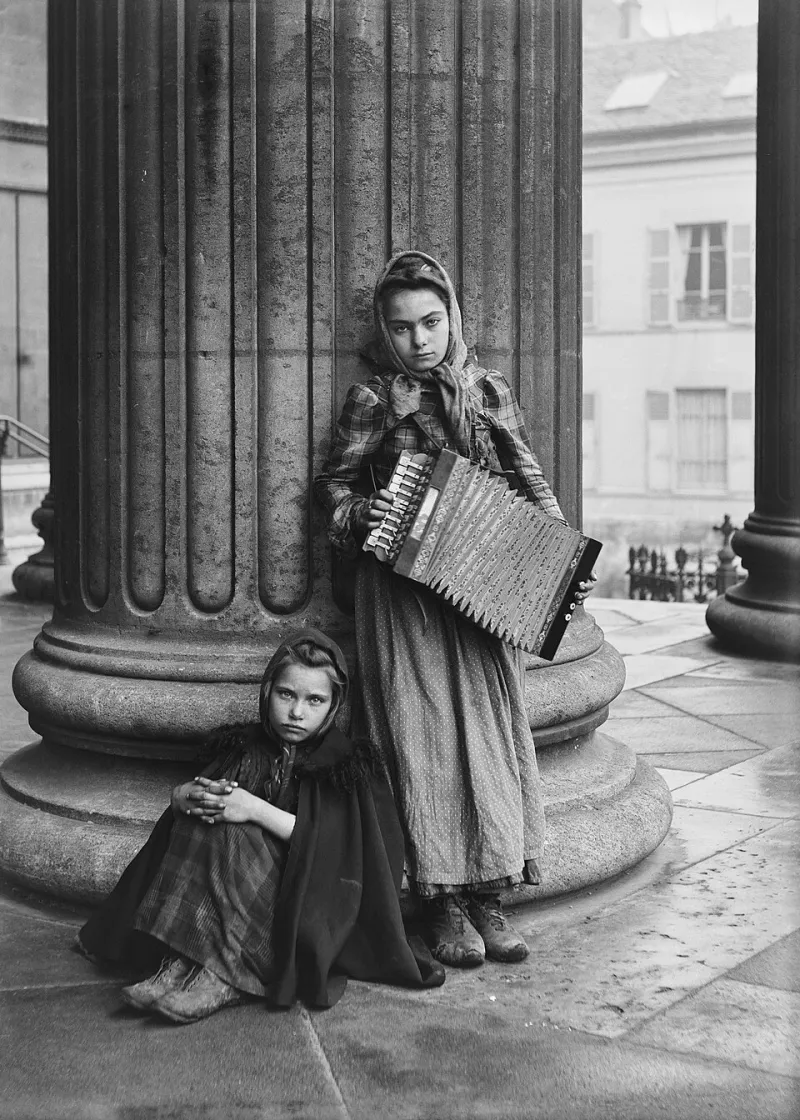
Photo: Photographer: unknown, Licence Ouverte, via Wikimedia Commons
There's this assumption baked into how we talk about creative partnerships — that the magic lives in the friction, the back-and-forth, the endless late-night sessions where two minds grind against each other until something sparks. And sure, that's part of it. But it's not the whole story.
Some of the most enduring creative work ever made came out of pairs who knew when to stop talking. Who understood that the space between sessions wasn't dead air — it was load-bearing.
The Myth of Constant Collaboration
We're kind of obsessed with the idea of the creative duo as a single, perpetually humming unit. Think of any iconic partnership and the mythology almost always centers on togetherness — the shared studio, the finishing-each-other's-sentences energy, the sense that they were always, always in it together.
But dig a little deeper and a different picture starts to emerge.
Paul Simon has talked openly about the fact that he and Art Garfunkel spent significant stretches working independently, Simon writing alone and Garfunkel developing his vocal interpretations in isolation, before they'd come back together and let those separate threads intertwine. The silence between them wasn't absence. It was where each of them figured out what they actually thought before trying to explain it to the other person.
Or look at the way Trey Anastasio and Tom Marshall have operated across decades of Phish material — Marshall sending lyrics from a distance, Anastasio sitting with them alone, neither of them forcing a real-time consensus on what the song should become. The gap in their process isn't a flaw. It's the mechanism.
What Negative Space Actually Does
In visual art, negative space is the area around the subject — the emptiness that gives the main thing room to breathe and be seen. It's not nothing. It's doing active work.
The same principle applies to collaboration. When both people in a creative partnership are constantly producing, reacting, adjusting, and compromising, the work can start to flatten out. Every rough edge gets negotiated away. Every weird instinct gets second-guessed before it has a chance to develop into something real.
The pause — the period where neither partner is pushing — gives ideas time to calcify into something worth defending. You come back to the table with a point of view instead of a question mark. And two people with actual points of view make for a much more interesting conversation than two people endlessly deferring to each other.
This is the part nobody talks about in those breathless profiles of creative partnerships: the solo time isn't a break from the collaboration. It's a core ingredient.
Respecting the Solo Work
One of the healthiest things two collaborators can do is treat each other's independent work as sacred. Not untouchable — but worth protecting long enough to be understood on its own terms before it gets folded into the shared project.
This requires a kind of ego management that's genuinely hard. When your collaborator goes quiet and works alone, it can feel like they're pulling away, or like the partnership is losing momentum. The instinct is to fill the silence with check-ins, feedback requests, little nudges to keep the energy alive.
Resist that instinct.
When you give your partner's solo work room to breathe — when you don't rush to put your fingerprints on it before it's ready — you're actually doing the collaboration a favor. You're letting them bring something fully formed to the table instead of something half-baked that got shaped by your presence before it had a chance to become itself.
The best creative partners know how to be genuinely interested in what the other person makes when they're not in the room. That curiosity is what keeps the partnership generative over years instead of months.
The Danger of Forced Consensus
Here's where a lot of creative partnerships quietly fall apart: the pressure to agree.
When two people are in constant contact, the social dynamics of the relationship start bleeding into the creative decisions. You soften a critique because you don't want to hurt feelings. You go along with a direction because you've already had three disagreements this week and you don't have the bandwidth for a fourth. You compromise when you should have pushed back, or push back when you should have let something sit.
Silence short-circuits some of that. When you take a beat — a real one, not a passive-aggressive one — you create distance from the interpersonal dynamics and get a little closer to the actual work. You can ask yourself what you actually think without the other person's face in your head.
Then when you reconvene, you're not negotiating a relationship. You're talking about the work.
Building the Pause Into the Process
This doesn't have to be accidental. You can design silence into how you and your collaborator operate.
Some practical ways that actually work:
Set solo windows. Agree upfront that after a brainstorm or a rough draft, both of you go away and sit with it independently before reconvening. No texting half-formed thoughts. No quick voice memos. Just space.
Don't comment until you're ready. If your partner shares something and your first instinct is to immediately react, wait. Sleep on it. Your second response is almost always more useful than your first.
Protect the weird ideas. When you're working alone, let things get strange without pre-editing for your collaborator's taste. The stuff that feels too risky to share is often the most interesting material to bring to the table.
Check in about the process, not just the product. Every so often, ask your collaborator how the silence is feeling for them. Is it generative? Anxious? Clarifying? The meta-conversation about how you're working together matters as much as the work itself.
Half the Work Is Knowing When to Stop
There's something almost counterintuitive about it — that pulling back, going quiet, doing less together can actually produce more. But it tracks with what the best creative partnerships seem to have in common: a deep mutual respect that extends to each other's solitude.
The silence isn't a gap in the collaboration. It's the negative space that makes the collaboration visible. It's where each person figures out what they're actually trying to say before they say it to someone else.
The notes matter. But so does the space between them. Sometimes more.