Stop at Half: The Creative Magic Living in Your Unfinished Work

Photo by Photo by Annie Spratt on Unsplash on Unsplash
Somewhere around the midpoint of almost every creative project, something interesting happens. The rough edges are still rough. The original spark — that weird, specific impulse that made you start in the first place — is still visible. You haven't smoothed it into something presentable yet. And paradoxically, that's exactly when the work is most alive.
We talk a lot about finishing. Ship it. Launch it. Get it out the door. There's a whole culture built around overcoming the paralysis of perfectionism, and that conversation is useful. But there's a quieter problem that doesn't get nearly as much airtime: what we lose when we over-finish. What gets sanded away in the pursuit of done-right instead of just done.
The halfway mark is where the most interesting creative decisions live. And a lot of us blow right past it.
The Demo That Became the Album
In music production, there's a well-documented phenomenon where the demo — the rough, first-pass recording — captures something the final version can't quite reach. Producers and engineers talk about it constantly. You spend weeks on a track, layering, mixing, perfecting the low end, and then you go back and listen to that voice memo you recorded at 1am in your kitchen, and something about it just hits differently.
It's not nostalgia. It's not lo-fi fetishism. It's that the demo still has the original intent intact. The performance was unrehearsed. The arrangement was instinctive. Nobody had told the song what it was supposed to be yet.
This is why artists like Bon Iver built entire sonic identities around recordings that felt unfinished by conventional standards. Why Kendrick Lamar's early Overly Dedicated mixtape still sounds rawer and more urgent to a lot of listeners than some of his more polished releases. The halfway version of a thing carries the maker's fingerprints in a way that completion sometimes erases.
That doesn't mean demos are always better than albums. It means the process of finishing involves real losses, not just gains.
What Over-Refinement Actually Costs
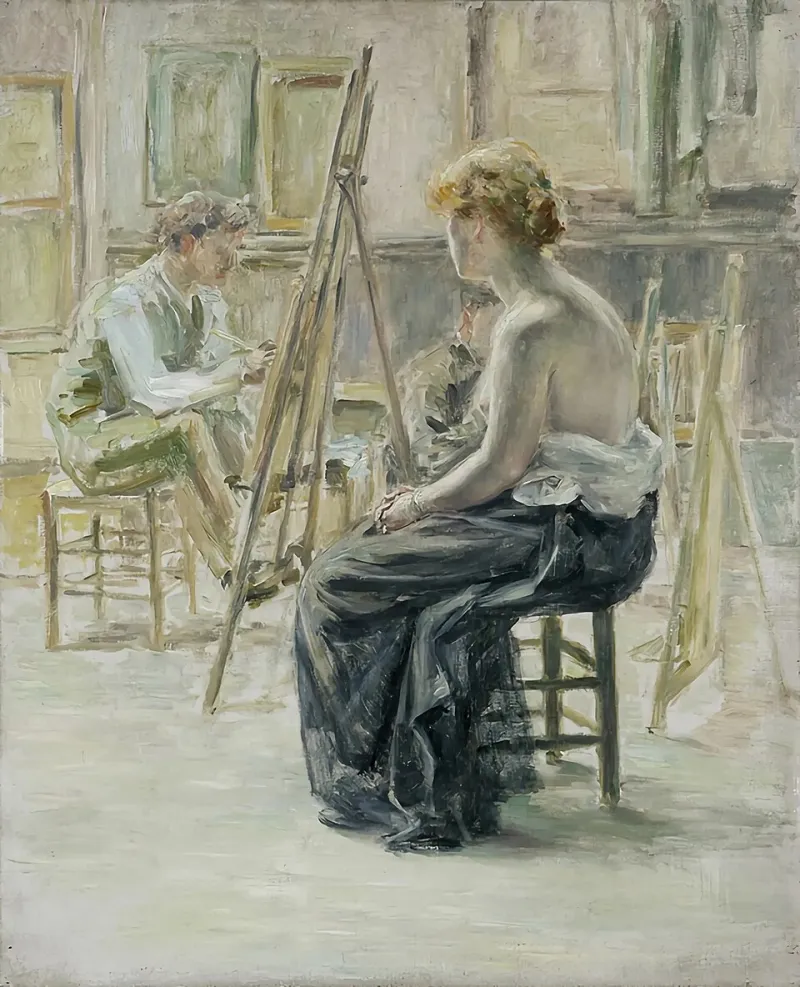
In visual art, the term "overworked" is almost universally understood as a bad thing. A painting that's been touched too many times loses its spontaneity. The brushwork that felt confident and expressive in the first session gets buried under corrections. The whole thing starts to feel labored, tight, like the artist was afraid.
Watercolorists deal with this constantly. The medium punishes hesitation. You either commit to the stroke or you end up with muddy, blended-to-death passages that look nothing like the original vision. A lot of watercolor instructors will tell students: stop before you think you're done. The painting almost always looked better two steps ago.
The same principle applies to writing. First drafts are famously messy, but they're also often more emotionally direct than what survives the editing process. The weird sentence that doesn't quite work grammatically might be the one that actually communicates what you meant. The tangent you cut for pacing reasons might have been the heart of the piece. Revision is necessary. Over-revision is its own kind of creative damage.
The halfway point — that place where the work is structurally coherent but hasn't been polished into something safe — is where authenticity tends to live.
The 50% Problem Nobody Talks About
Here's the real tension: most of us don't stop at halfway because we don't recognize it as a valid stopping place. We've internalized a binary. Either the work is finished or it isn't. Either it's ready to share or it's a draft. There's no cultural framework for saying "this is done at 60%" and meaning it as a compliment.
But what if we built one?
Some artists are already operating this way, whether or not they frame it in those terms. The musician who releases a stripped acoustic version instead of the full production. The painter who sells studies and process pieces alongside finished canvases. The writer who publishes the essay as a newsletter before it becomes a polished longform piece. These aren't failures to complete. They're intentional decisions to preserve something.
Abandoning perfection at the halfway mark isn't laziness. It's a specific kind of creative courage. It means trusting that the roughness is part of the meaning. That the gaps are communicating something. That the listener or viewer or reader is smart enough to meet you where you are.
Knowing When Halfway Is Enough
None of this is an argument for never finishing anything. Completion matters. Some work genuinely needs to be taken all the way — technically, structurally, emotionally. The trick is learning to tell the difference between work that needs more and work that's being over-handled out of anxiety.
A few questions worth sitting with:
Does the work still surprise you? If you've refined it to the point where every element is exactly what you expected, you may have refined out the part that made it interesting.
Are you fixing problems or managing discomfort? There's a difference between solving a genuine structural issue and fiddling because the rawness makes you nervous. One improves the work. The other protects your ego at the work's expense.
Would a stranger feel something at this stage? Show it to someone who doesn't know what it's supposed to be. If they respond — if it lands, even partially — that's information. The work might already be doing its job.
What would you lose by continuing? This one's underrated. Before every new revision pass, name specifically what you'd be giving up. Sometimes the answer is nothing. Sometimes it's everything.
Half Is a Whole Thing
The name Half Adams isn't accidental. There's something in the half — the incomplete, the approximate, the not-quite-there — that holds more creative truth than the finished version sometimes can. Art lives in the space between intention and execution. Music happens in the gap between the note and the silence after it.
Your project at 50% completion is a real thing. It exists. It has a feeling and a point of view and an original impulse that's still breathing. The question isn't always how to finish it. Sometimes the question is whether finishing it means losing the part that matters most.
Stop. Look at what you have. It might already be the thing.