Off-Balance on Purpose: How Creative Mismatch Unlocks Your Best Work

Photo by Photo by Nigel Hoare on Unsplash on Unsplash
There's a moment in almost every creative project where you're tempted to even things out. The composition feels a little heavy on one side. The melody keeps resolving too cleanly. The collaboration is pulling in two directions that don't quite match. And the instinct — almost universal — is to fix it. Smooth it down. Find the center.
But what if the lopsidedness is the point?
Across music, visual art, design, and even the way creative partnerships work, some of the most resonant work in the world didn't come from people chasing balance. It came from people who learned to trust the tilt.
Why the Brain Loves a Little Wrongness
Here's the thing about perfect symmetry: the human brain processes it and moves on. It registers as complete, resolved, done. There's nothing left to do with it. But asymmetry — something slightly off, a weight distributed unevenly, a note that doesn't land where you expected — keeps the brain engaged. It creates a low-level tension that pulls you in and holds you there.
Psychologists call this the aesthetic itch. It's the same reason a painting with the subject slightly off-center feels more dynamic than one where everything lines up. Or why a song that sits in an odd time signature, even one you can't consciously identify, makes you feel vaguely restless in the best possible way.
Creatives who understand this don't stumble into asymmetry by accident. They engineer it.
The Lopsided Canvas
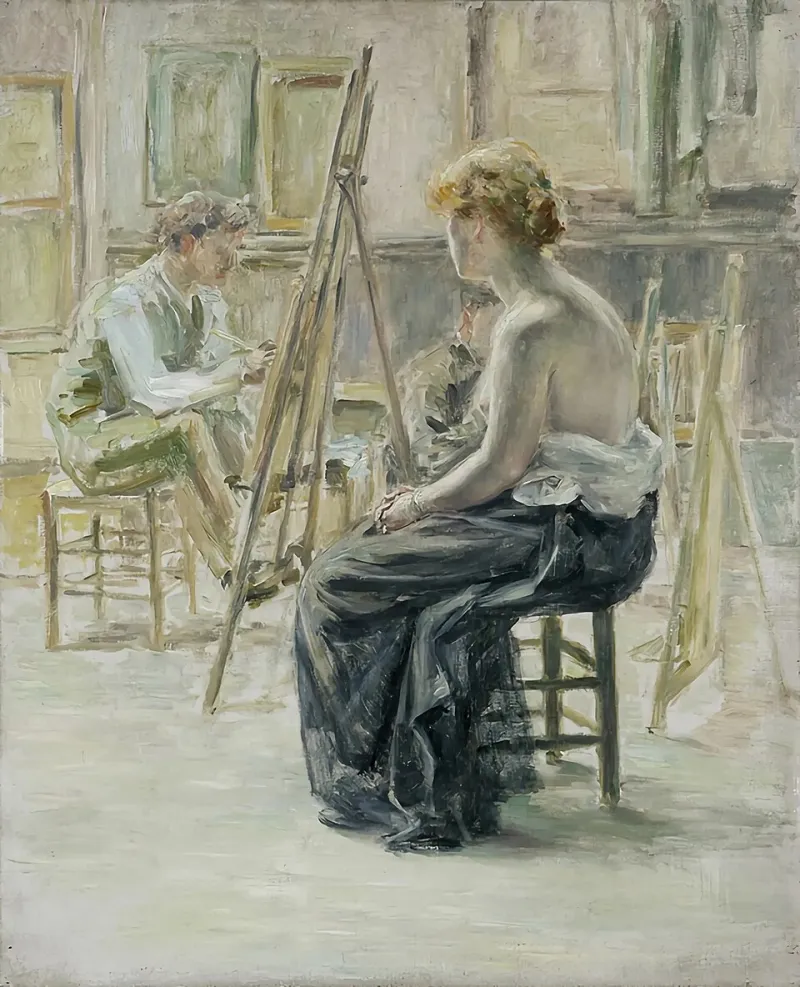
Walk through any contemporary gallery — or just scroll through the work of photographers and designers doing interesting things right now — and you'll notice how rarely the most striking pieces are balanced in any traditional sense. The subject is in the corner. The negative space swallows half the frame. Something is cropped in a way that feels almost uncomfortable.
This isn't laziness or accident. It's a deliberate decision to leave the viewer's eye somewhere to go. When everything is centered and proportional, the eye lands, registers, and exits. When the composition is off, the eye wanders, searches, and keeps returning. The work stays with you longer because it never fully resolves.
Designers working in branding and identity have been onto this for decades. Think about logos that feel slightly unexpected — a wordmark that's heavier on one end, an icon that sits asymmetrically inside its container. These choices read as confident and distinctive precisely because they resist the urge to play it safe down the middle.
What Producers Know That Most People Don't
In music production, asymmetry shows up in ways that are both technical and deeply intuitive. One of the most common is the deliberate use of rhythmic displacement — where a producer nudges a snare hit a few milliseconds late, or drops a bass note just slightly ahead of the beat. To an untrained ear, it might just feel like the track has a certain looseness, a human quality. To a producer, it's a calculated choice to create tension between what the listener expects and what they actually hear.
The late J Dilla built an entire sonic legacy on this principle. His drum programming famously resisted the quantized, on-the-grid perfection that most producers were chasing. Instead, his beats breathed and stumbled in ways that felt almost uncomfortably alive. The asymmetry wasn't a flaw. It was the whole thing.
You can hear the same principle at work in classical composition — Beethoven building movements that feel structurally lopsided until a final section suddenly makes sense of everything — and in jazz, where the entire idiom is built on musicians deliberately playing against each other's expectations in real time.
Collaboration Is an Asymmetry Engine
Here's where it gets really interesting for anyone working with another person on a creative project: the most generative collaborations are almost never the ones where both people think alike. The partnerships that produce something genuinely new tend to be the ones where the two contributors are fundamentally mismatched in some way.
One person is instinctive, the other is methodical. One works from emotion, the other from structure. One wants to add, the other wants to strip away. And instead of resolving that tension by finding a compromise in the middle — which usually produces something generic — the best collaborators let the friction stay. They lean into the imbalance and see what it generates.
Think about the classic creative duos throughout American music history. Lennon and McCartney. Jagger and Richards. Outkast's Andre 3000 and Big Boi. In each case, the partnership worked not because the two people were similar, but because they weren't. The asymmetry between their instincts and aesthetics created a productive conflict that neither of them could have generated alone.
Your Process Might Need a Tilt
This applies to how you work, not just what you make. A lot of creative people default to a process that's built around balance: equal time for ideation and execution, a tidy back-and-forth between making and editing, a workflow that feels stable and predictable.
But some of the best creative work comes from deliberately unbalancing the process itself. Spending way too much time on one small element while letting the rest stay rough. Doing ten times as much research as you think you need before touching the actual work. Or the opposite — making something fast and loose without any research at all and seeing what your instincts produce when they're not second-guessing themselves.
The imbalance surfaces things that a more measured approach would smooth over. It creates conditions where accidents happen, where unexpected connections get made, where the work goes somewhere you didn't plan.
Learning to Trust the Lean
None of this means chaos for its own sake. Asymmetry without intention is just mess. The difference between work that feels deliberately off-balance and work that just feels unfinished is whether the creator understood what they were doing and committed to it.
That commitment is the hard part. Because the pull toward symmetry — toward safety, toward the middle, toward the version of the work that no one will object to — is real and constant. It takes genuine confidence to look at something that's leaning hard to one side and decide that's exactly where it should be.
But when you get there, when you stop trying to fix the tilt and start working with it, something shifts. The work starts to feel like yours in a way that balanced, resolved, technically-correct work rarely does. It has weight on one side. It has a direction. It has somewhere to go.
Half of what makes creative work memorable is the part that doesn't quite add up. The thing that sits wrong enough to stay with you. The asymmetry you can't shake.
Leave it there.