Stuck at 50: Why the Middle of Your Creative Path Is Actually the Starting Line

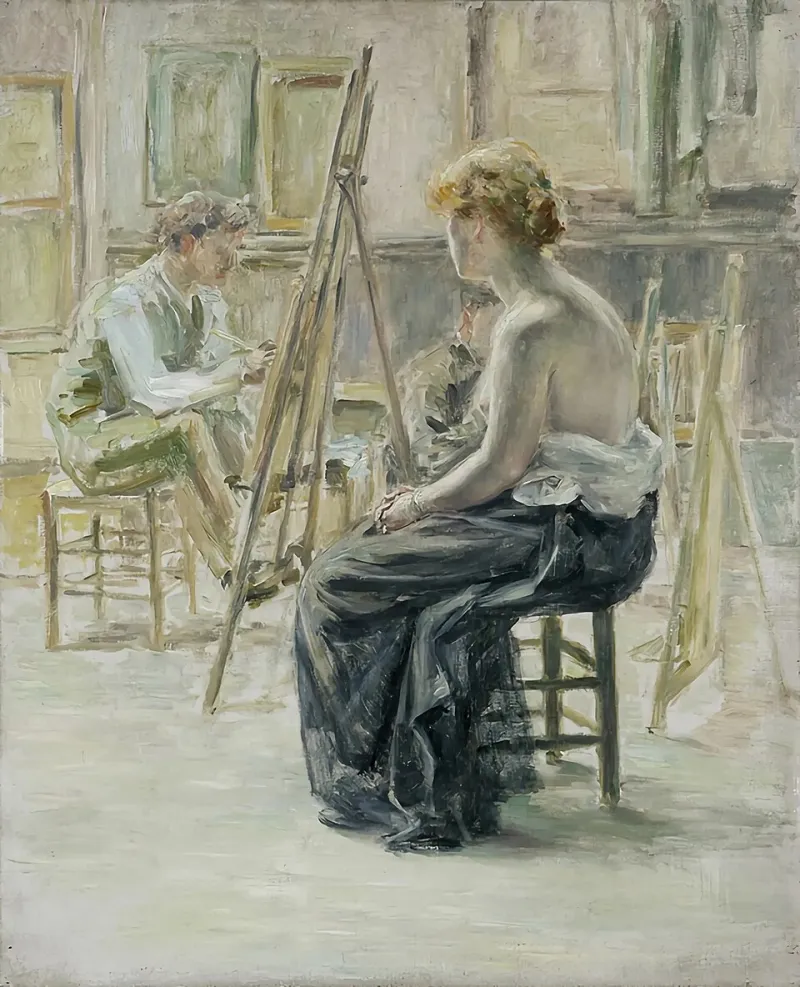
Photo by Photo by Hanna Lazar on Unsplash on Unsplash
There's a moment every creator knows but nobody really warns you about. You've left the honeymoon phase behind—that early rush where everything feels electric and possible—but you haven't landed anywhere that feels like mastery yet. You're somewhere in the middle, and it feels like mud.
Most people treat that feeling like a problem to fix. Push through it, grind past it, or quietly abandon the project and start something shiny and new. But what if that murky middle isn't a malfunction? What if it's the actual beginning of something real?
The Myth of the Clean Arc
We've been sold a story about creative growth that looks like a tidy upward curve: you start, you struggle, you improve, you arrive. Rinse and repeat. But talk to any working artist or musician long enough and they'll tell you the arc is messier than that. It doubles back. It stalls. It takes weird detours through genres or mediums you never expected to touch.
The idea of the "halfway point" as a dead zone is mostly a myth we inherited from productivity culture—the same culture that fetishizes launch day and completion rates. Neither of those endpoints is where the interesting stuff actually lives.
Jamila, a Portland-based visual artist who splits her time between illustration and ambient music composition, puts it plainly: "I spent years trying to graduate out of the middle. I thought once I hit some threshold—a certain number of shows, a certain follower count—I'd feel like a real artist. But the middle is where I actually learned to make decisions. That's where my style came from."
Half-Formed Is Not Half-Hearted
There's a distinction worth making here. Being in the middle of your creative development is not the same as being uncommitted or lazy. In fact, it might be the most active, high-stakes place you can occupy.
When you're a beginner, you're absorbing. You're pattern-matching, copying your influences, figuring out the basic grammar of your craft. When you're genuinely advanced, you've internalized enough that decision-making becomes more intuitive. But in the middle? You're doing both simultaneously, and that's exhausting in a way that's actually productive.
You're conscious enough to see your own limitations but skilled enough to push against them. That friction is generative. It's not comfortable, but comfortable has never made great work.
Dennis, a Nashville-based guitarist who spent a decade playing other people's sessions before releasing his own material, describes the middle as "the place where you stop sounding like your influences and start sounding like yourself—but you don't realize that's what's happening until later."
"I thought I was failing during that stretch," he says. "I was comparing myself to players who'd been doing it for 30 years. But looking back, that's when I was actually building something. I just couldn't see it from the inside."
Why We Flee the 50% Mark
The halfway point is uncomfortable for a specific reason: you know enough to know how much you don't know. Early on, ignorance is kind of a gift. You don't fully understand the gap between where you are and where you want to be, so you just move. Later, experience smooths out the anxiety. But in the middle, you see the gap clearly and feel underequipped to cross it.
This is the zone where most people either quit or pivot to something easier. And honestly? That's understandable. Social media doesn't help. You're watching people at the beginning of their journey posting with infectious enthusiasm, and people at the top posting polished, confident work. The middle doesn't make for great content. It's not cute and scrappy, and it's not aspirationally sleek. It just looks like someone working hard and not quite getting there yet.
But that's exactly why it matters. The middle is where your actual creative identity forms—away from the performance of progress, away from the pressure to have it figured out.
The Half Adams Principle
There's something in the name "Half Adams" that resonates here. Half. Not complete. Not abandoned. Half suggests a thing in process, a thing that exists meaningfully in its partial state. That's not a flaw in the concept—it's the concept.
The best creative work often carries that quality. It holds something back. It doesn't over-explain itself. It lives in the space between fully formed and still becoming. And the creators who make that kind of work? They tend to be people who got comfortable operating in the middle—who stopped treating incompleteness as a temporary state to escape and started treating it as a permanent condition to work with.
How to Actually Use the Middle
If you're sitting at that 50% mark right now—in a skill, a project, a creative identity—here are a few ways to stop fighting it and start using it.
Stop benchmarking against endpoints. Comparing your middle to someone else's beginning or someone else's peak is a category error. You're in a different phase. The metrics don't translate.
Document obsessively. The middle is where your voice is forming, and you won't be able to see it clearly until you're past it. Keep notes, sketches, recordings, drafts. You'll want them later, and they might be your most honest work.
Let the confusion be information. When something isn't working, the middle-phase creator's instinct is often to assume they're doing it wrong. But confusion at this stage usually means you're bumping up against the edge of your current understanding. That's a map, not a dead end.
Resist the restart reflex. Starting over feels like progress because beginnings have that fresh momentum. But if you keep bailing at the 50% mark, you never get to see what the other side looks like. The discomfort you're feeling is not a sign to quit—it's a sign you're close to something.
The Other Side of the Middle
Here's what most people who push through will tell you: the middle doesn't end with arrival. It ends with a new middle. A more interesting one, with harder problems and better tools to work with. That's not a consolation prize—that's the whole game.
Creative growth isn't linear and it isn't finite. The halfway point keeps moving. Which means you're always, in some sense, at the beginning of something. The trick is learning to feel at home there.
Jamila puts it this way: "I used to think I'd feel ready eventually. Now I think readiness is kind of a scam. You just get better at working while you're not ready."
That's not a defeat. That's a practice. And if you're sitting in the middle right now, feeling stuck and uncertain and not quite fluent in your own creative language yet—that's not a sign you're behind. It's a sign you're in the right place.
Stay there a little longer. See what it's trying to show you.